Monday, June 1, 2009

Progress: Breaking a Cycle


See:

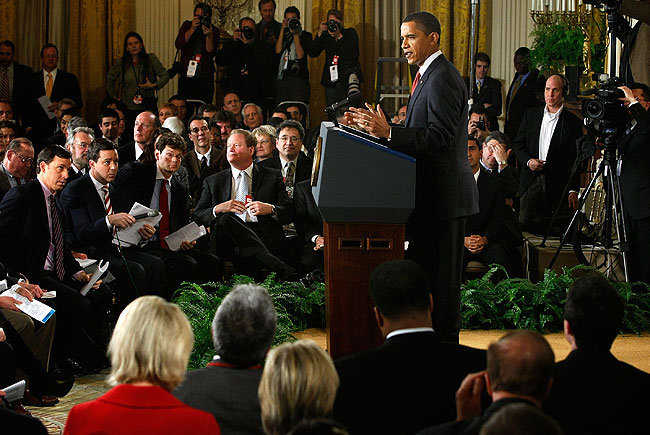
-43 consecutive white presidents

- 44th president is of color


Think:


-Cycle repeated for hundreds of years

-44th president shows the cycle being broke

-US finally looking past race, accepting the individual on his merits, progress


Wonder:


-Will the US regress and return to its prior cycles

-Will the US progress and “change” the future


Themes (relating to class):


1. Relationship between whites and blacks (Huckleberry Finn)

2. Smith calls for change relating to racism and a persons “identity” (Fires In The Mirror)

3. Exploring into new frontiers—exploring westward (Manifest Destiny)
4. Obama's "green light" = successful presidency solving our countries problems (Gatsby)


Monday, May 25, 2009

Memorial Day


I was very taken by a story in the Chicago Tribune today, Memorial Day. In the small town of Sullivan, Illinois, the people of this small town of 4,400, honor each of their residents that are serving abroad in the United States Armed Forces. For each person service they have a sign with their name, the unit they are serving with and an American flag. I am always happy to honor those who have served or are serving our country every Memorial Day, but I also feel remiss the other 364 days of the year when I am not giving these brave people the acknowledgement they desire for their time and service. The plan that the small town of Sullivan has in place helps everyone remember every day.

What do you think? Is this something we should consider doing in our home towns?

Sunday, May 17, 2009

Does a Picture Tell a Thousand Words?

This past weekend, my brother returned from college and over dinner I was explaining the presentation given by Louis Masur related to the photograph “The Soiling of Old Glory.” Mr. Masur commented that the picture does not tell a thousand words, but you actually need a thousand words to accurately explain what was happening when it was taken. My brother mentioned a photograph project he did in English class last fall on a photograph call “Trolley” taken in New Orleans around 1955 by Robert Frank and published in The American. In contrast to Masur’s “The Soiling of Old Glory,” “Trolley” shows a picture that reveals much about the racial situation in New Orleans just before the Civil Rights Movement and Rosa Parks famous bus ride.

Take a look at the photograph. Do you agree that the "Trolley" photograph “tells a thousand words”?

Sunday, May 10, 2009

American Flag and Sports

As we discussed in class and the study of our book, The Soiling of Old Glory, the American Flag can be used for a number of meanings and serve many purposes. While watching the Blackhawks game I observed a number of fans using the American flag as a object of pride and to support and cheer on their team. This is much different from the American flag being used as a symbol of distress or used during protests. Furthermore, this support of the American flag contrasts that of how the German’s feel about their flag.


Next, while play a game at Duke Child’s softball and baseball fields I observed the American flag located behind center field. This flag is used when singing the national anthem. In addition, this flag is used for the purpose of checking the direction and intensity of the wind. Rarely, is the American flag acknowledged as a patriotic symbol with the singing of the national anthem.


It is interesting to contrast the different uses of the flag. It can be used to show patriotism, to serve a purpose, as protection or a weapon, or even used to support a sports team and country.
What other ways have you observed the flag being used?

It's a Matter of Class


Our class discussion this past Friday was very interesting as it appears that New Trier students have a warped perception of “upper class,” “middle class,” and “lower class.” When we determined the social class of Mr. Bolos based on profession, income, education, and overall wealth, many students were surprised to see that what they see as average “middle class” on the north shore is in reality the top of the “upper class” worldwide. I believe that our perceptions are skewed and related to two main things. First, we live in a predominantly “upper class” area but still try to divide it into “upper,” “middle,” and “lower” classes. Second, I believe the media has contributed to our perception of the different classes. Through television and advertising, we are exposed to the “upper class” on shows glamorizing the lives of the super rich and famous. This upper class is a very elite group but the media portrays them to be the norm. In contrast, the media under-represents the middle and lower working class. This is illustrated in a video narrated by Ed Asner and based on the book by Pepi Leistyna, “Class Dismissed” that shows how the media have negatively portrayed the working class.

Watch and see what you think about how shows such as “The Jerry Springer Show” “Beavis and Butthead,” and “Goodtimes” portray the middle class. What do you think of the comments made in the “Class Dismissed” video? Do you think their point is valid?

Thursday, May 7, 2009

American Flag


Yesterday in class, we had a discussion on the American Flag. When I was home I was talking to my mom and discussing the importance of the American Flag to our family. She told me that my brother has a framed American Flag that was once draped over the casket of my Uncle Andy, who served in the military. It is an honor that my brother has this special belonging, and furthermore, the American flag holds a personal meaning for our family. Next, I asked my mom what she thought of when she saw the American flag. She told me that it reminded her of her family member that traveled to the United States from other countries. She said it reminds her of her heritage and ancestors.


On the drive home from my practice I was stopped at a train. On the train there was a picture of a flag. What is the reason that the American flag is placed there and who puts it on the train? The train manufacturers, the government?


Currently I am sitting in a computer lab at school. Behind me hanging vertically, in the front of the room, is an American flag, but you are only able to see the bottom of it because the overhead projector screen covers the stars. This projector screen is not pulled down, it is merely sitting rolled up waiting to be used. Why is the flag hidden behind it and not displayed to the public?


Tuesday, May 5, 2009

Universal Health Care During Obama’s First Term?


David Wessel, in his article “Moment Is Ripe for President to Fix Health Care,” from April 30ths Wall Street Journal, states that it appears that Obama is aggressively developing a health care plan. Wessel believes that there are four reasons that the time is right for a successful new health care plan. Unlike 1994 when Clinton presented his Health Security Act, there has been a significant downturn in the economy with an increase in the number of uninsured Americans and an increase in the cost of health care so that it now is approximately 17.6% of the U.S.’s spending. Thus, the general public is unhappy with “the status quo.” Next, Obama’s White House team has learned from Clinton’s mistakes, that his plan cannot be complicated and complex. Third, the Democrats have a majority in congress and appear to be united in their support of health care legislation to provide coverage for the American people. Finally, “the price tag” to fund health care does not seem to be such a significant issue anymore. Compared to the cost of the bank bailout, more than 750 billion, funding health care now seems to be doable.

Do you think Obama will present a new health plan by the end of 2009? If so, do you think it will pass congress?
How will the United States pay for all these expensive plans and bailouts?

Sunday, April 26, 2009

Health Care for the Poor and Uninsured


As I have been working on my junior theme, “Why doesn’t the United States have a universal health care plan that provides affordable access to all its citizens?,” I came across an interesting article in the Chicago Tribune called “Are hospitals passing off their low-profit patients?” The authors report that patients are not getting fully treated at nonprofit hospitals and are sending them on to Cook County’s Stroger Hospital. Despite nonprofit hospitals receiving millions of dollars in tax breaks and benefits for helping the uninsured, these hospitals are sending the patients to the already over-crowded Stroger Hospital. Unlike a private hospital, Stroger Hospital acts like a “safety net for the poor and uninsured,” but the hospital is struggling financially.

How do we solve the health care crisis? Wouldn’t a universal health care system help pave the way?

Thursday, April 23, 2009

REVISED INTRO!

“Of all forms of inequality, injustice in health care is the most shocking and inhumane,” Dr. Martin Luther King, Jr. once remarked (“About”). For decades, health care has been a main topic in elections and a major concern for all Americans. Every attempt for the United States to enact a health care reform plan that would provide universal coverage has failed (Quadagno 201). In a nation that spends sixteen percent of its wealth on medical care (Cohn 225), why can we not come up with a successful universal health care system? Health care needs to be treated as a right, not a privilege, and work needs to be done to provide affordable health care to all American citizens. Why is universal health coverage so important? There are 50 million Americans without incurance (Moore). Without coverage people do not have access to healthcare. Uninsured Americans tend to be diagnosed with later-stage tumors and do not receive preventative care (Cohn 23). It is estimated that 18 thousand Americans will die because they do not have unsurance (Moore). Throughout the history of the United States, there have been numerous failed attempts and only a few incomplete successes in providing universal health care due to the opinions and influence of propaganda, lobbyists, special interest groups, political groups and the public. A clear understanding of the reason for these failures may allow current advocates of universal health care to devise a plan that is successful in the United States.
Is the map easier to follow?

Sunday, April 19, 2009

“Harry and Louise” Influence Public Opinion in 1993-94.

“Having choices we don’t like is no choice at all!” exclaims Louise in the 1993 TV advertisement funded by the Health Insurance Association of America (HIAA) in response to President Clinton’s Health Security Act of 1993. The HIAA is a lobbying group for the Health Insurance Industry that felt threatened by Clinton’s Plan. A study by Goldsteen et al., published in Journal of Health Politics, reveals that the HIAA felt that the public was embracing Clinton’s Plan and mounted “commercial-style mass media campaigns” to turn public opinion against the proposed healthcare reform. This campaign was successful in inciting “Fear” of the government controlling our access to health care. Along with oppositions from other special interest groups, uncompromising Republicans, and complacent Americans, Clinton’s Plan failed.

Do you have concerns about allowing the U.S. Government taking over the health care industry and creating a single-payer system? In these times of economic troubles, would a single-payer plan that does away with business like Health Insurance Companies and HMOs further jeopardize our countries economic recovery or is it the way to go?

Sunday, April 12, 2009

Junior Theme Intro:

Introduction Paragraph:


Dr. Martin Luther King, Jr. once remarked that “Of all forms of inequality, injustice in health care is the most shocking and inhumane,” (Healthcare-Now! 3). For decades, health care has been a main topic in elections and a major concern for all Americans. Every attempt for the United States to enact a health care reform plan that would provide universal coverage has failed (Quadagmo 201). In a nation that spends sixteen percent of its wealth on medical care (Cohn 225), why can we not come up with a successful universal health care system? Health care needs to be treated as a right, not a privilege, and work needs to be done to provide affordable health care to all American citizens. This proposal seems simplistic, however throughout the history of our country there have been numerous failed attempts and only a few limited incomplete successes. We need to learn from the outcomes of these attempts, along with the successful systems working in other countries, in order to create a plan in which every American has access to health insurance.


*Please comment on what you believe I am planning on talking about in the body paragraphs of my paper, aka the map. I am unsure if this is clear enough. Also, does the beginning flow together connecting my grabber, background, and question, to my thesis and map?

Sunday, April 5, 2009

Why Don’t Americans Have Universal Health Care? Why is Health Care treated as a Privilege, Not a Right?


My Junior Theme focuses on the United States’ Health Care Crisis. As I was reading an article that I found on the CQ Researcher Online, I was stunned to find out that in the year 2007 about 45 million Americans lacked health insurance. Incredible, devastating stories of average Americans being unable to afford their medical care or obtain health insurance are told by Jonathan Cohn in his book Sick. Health insurance was one of the main issues throughout the recent presidential campaign and it has been a problem throughout history. My question is: Why don’t Americans have universal health care? And, why is health care treated as a privilege, not a right?

Do you think it is the right of every American citizen to have health care?
Should health care be provided by employers or the government?

Monday, March 30, 2009

Is There Justice?


I was shocked to read the headline in Jeff Coen’s article, “He Killed 14 People. He got 12 Years,” from the March 27th in Chicago Tribune. Nicholas Calabrese, a mob hit man, killed 14 people over the years and because he is cooperating with police officials will only receive a 12 year sentence. In fact, since he has been in jail since 2002, he will only have about 4 more years to serve. Families of the victims were outraged. However, without Calabrese’s testimony, mob bosses such as Joseph Lombardo and James Marcello and their “enforcers” Paul Schiro and Anthony “Twan” Doyle would be free. In a companion article by John Kass, “Leniency to Calabrese vs. mob and its justice,” Kass suggests that the “fear” or the mob getting back at him for informing on them will be punishment enough.

What do you think should be the policy on murderers who cooperate with officials? Should they get a lighter sentence in order to encourage others to come forward and cooperate? Is the “Fear” of retribution enough of a punishment?

Thursday, March 26, 2009

"Symbolic Interactions"


Recently in American Studies we discussed “symbolic interactions” and how people that believe in these interactions feel that everything in life is a symbol. An example of this was stated in the book, The Soiling of Old Glory, and the picture on the front cover that carries so many different meanings and interpretations. Mr. O’Connor brought up an example of a symbol that he saw when visiting different court rooms. He was able to identify the stance that a judge has by the artwork that he/she places around his/her office or court room. I thought that this topic was really interesting, and I started to look for symbols in my life. They were everywhere! Some symbols seemed meaningless, but others surprised me and I was amazed at how many connections I was able to make.

What symbols do you see in your life?

Sunday, March 15, 2009

Our Future Exploration into Space


James Janega, the author of “Orbiting the Moons of Jupiter,” in the Chicago Tribune, discussed how NASA recently planned a mission to travel to Jupiter. This “massive, multibillion-dollar interplanetary mission” would be aimed to launch in 2020. Two spaceships are going to be pit into orbit around two of Jupiter’s moons. The mission will take nine years to complete and the space crafts will travel through the solar system for 2.7 billion miles. These space orbiters will study Jupiter and its moons, Ganymede, Callisto, and Io. When their mission ends, they will crash into one of Jupiter’s moons or Jupiter itself.
Jupiter and its numerous moons store an amount of liquid water that is thought to surpass all that exists on Earth. Therefore, this mission is going to be a very important part of space exploration because scientists believe that the mission would explore the “most likely pocket of the solar system besides earth where there is a plausible chance for life to exist.”

What are your thoughts on the mission?
In times of economic disaster should our country be spending money on space exploration missions?

Monday, March 9, 2009

Remembering the Past

With President Barack Obama, an African American, in the White House, there has been much talk on NPR and talk shows about abolishing Black History month and banning books such as Huckleberry Finn. I found this top very interesting as we just finished reading and analyzing Huckleberry Finn, and it relates to a number of class discussions. In this week’s edition of Newsweek, Allison Samuels refutes these ideas in her article, Rethinking Race in the Classroom. Those in favor of the banning of the books want to remove the “N—” word from history and any negative connotations regarding African Americans. While I am against the prejudices revealed in these books, I feel they should remain in the curriculum. We should not shut them away in the closet and ignore history. This topic is an important part of our country’s history. The atrocities of the past should not be forgotten, while at the same time our current progress should be applauded. Black History month and these controversial books help us remember the past and work for a better tomorrow.
~Check out the link to the article. It is really interesting.~


Do you think Huckleberry Finn should be banned?
What are your thoughts on continuing Black History month?

Sunday, March 8, 2009

Should Dora Grow Up?

Throughout the weekend, I spent much of my time with my younger four year-old cousin. Her favorite cartoon icon is Dora the Explorer. Tons of her toys, clothing, and materials have Dora the Explorer on them. She was wearing a shirt with Dora and Boots on it and even her tennis racket had a picture of Dora painted on the side. This morning I was looking at the Chicago Tribune newspaper at a funny illustration called "Recessionista Barbies." Below this, the title, “Just what is new Dore exploring,” caught my eye. The author discusses how the spunky shorts, backpack, and purple t-shirt wearing “childhood fixture for millions” is being transformed into a “tweenage Dora” that wears short skirts and pointy shoes. A mother of two young girls, Stephanie Raleigh states that, “Dora ‘growing up’ in the stereotypical way just reinforces the issues that young girls face today.” Personally, I really liked this doll because she didn’t follow the typical long hair, stick thin, mature doll motif that is so common today. This doll is such a large part of many children’s lives, such as my cousin, that it will change the way they see their role model. I would rather have my cousin look up to the nature loving explorer than this “tweenage Dora” model that can push kids towards the wrong path. James Oliphant closes the article asking, “And what’s in store for Dora’s animal loving cousin, Diego? Perhaps he becomes a hip-hop star with plenty of bling and an appetite for gunplay? Or a rough-around-the edges street-racer?”

What do you think about this topic? Should Dora follow through with this transformation?

Thursday, March 5, 2009

The Hidden Messages New Trier Portrays to the Public


Today in class we discussed the numbers of different signs posted around the school and the meanings that they hold. From this discussion and observations I have made throughout the day, I came to the conclusion that New Trier’s goal is to portray its success to the public. It seems that a large portion of this goal involves sharing our achievements. I have found that the greatest of our achievements have been placed in very public places throughout the school. For example, there are signs, banners, and posters that support our sports teams and our academic success. In the gymnasium we have flags that list all of the years that our sports teams have made it to state. In the front of the school we post HUGE banners that say, “Good Luck at State” where a welcome sign should be placed. Also, when you walk through the halls many teams post flyers on lockers wishing their teammates good luck at their upcoming game and every saying relates to winning. Next, we show our academics in the lists of important people that have graduated from our school, and in many of our showcases placed around the school (for example, science Olympia). Finally, we display our positive students’ behavior with posters showing the drinking and smoking rates. Our school focuses on the successes that we have had in the past and the successes that we hope to have in the future.


Do you agree that we portray our success and achievements to the public? If so, where else do you find examples of this in our school?

Sunday, March 1, 2009

What’s Next?


Recently I was reading an article from the Chicago Tribune titled “Obama sets Iraq timeline.” Julian E. Barnes, the author discussed President Barack Obama’s plans for the future. Obama has stated the procedures that he wants to take to retrieve the U.S. troops from Iraq. He has created a timeline that expects the number of U.S. troops to decrease from currently 142,000 to 35,000-50,000 by August 31, 2010. He also confirmed that all the U.S. forces are scheduled to be out of Iraq by December 31, 2011. There have been many mixed feelings about Obama’s troop timeline. Many are expressing that they believe that 35,000-50,000 is too large of a group to remain in Iraq. Furthermore, many of the Sunni lawmakers are upset over the departure of the forces, who are seen as “a buffer against Shiite persecution.”

Do you think that it is a good idea to leave troops in Iraq to “advise Iraqis, protect civilians and conduct counterterrorism missions?”
Do you believe that August 31, 2010 is a reasonable date for the Iraq combat mission to end? And is December 31, 2011 a reasonable date to have all forces out of Iraq?

Sunday, February 22, 2009

Audacity of Hope or Audacity of Greed


My thoughts stem from an ad in the Chicago Tribune from February 2nd which asks:

“Why is Senator Max Baucus (D-MT) proposing to use your money to bail out Kohlberg Kravis Roberts & Co. (KKR), Carlyle, Blackstone and other private equity firms?”

The concern is that Obama’s stimulus plan may provide money or tax cuts to these private equity firms and companies with CEOs receiving HUGE salaries and massive bonuses.

Shouldn’t the stimulus plan be helping main stream America, as the candidates reiterated in the presidential debate?

Will Obama’s stimulus plan be successful or has greed and mis management gone too far to be turned around?

Monday, February 16, 2009

The Perils of Nature

From the time of the Wright Brothers, in 1903, to NASA’s trip to the moon, man has mastered the art of flying. Despite the advances in technology, there are numerous risks with every takeoff and landing. Continental Flight 3407 took off from Buffalo Niagara Airport on Februrary 12th. Along the way the pilots noted ice on the wings. The crash ended in a fireball(link to video of plane an fireball), with a loss of 49 lives. Earlier this year, another flight, US Airways flight 1549, was scheduled to land in Charlotte, N.C., on January 15th, encountered a flock of birds which caused the engines to fail. Miraculously, Captain Sullenberger managed to glide the plane into the Hudson River, saving everyone on board. It seems that most of us take for granted such technological advances and our safety. In both of these instances it seems that nature stepped in with disastrous consequences.
How can we come to terms with the loss of lives in Flight 3407? What can we learn from these events? What other perils has nature created for us?

Monday, February 9, 2009

What's Next After the Cowboy President?

Recently I read an article in the February 8th Chicago Tribune, “State of the uniform,” discussing Obama’s clothing choices. The article stated that, “Few presidents’ fashion choices have attracted as much attention as Barack Obama’s, yet each has left an impression in the annals of style.” The author, Constance White, goes on to discuss six presidents’ clothing choices. I found her analysis of George W. Bush the most interesting. White commented, “Evoking oil and swagger, George W. Bush’s cowboy boots and belts now seem emblematic of the Wild West Mentality.” This directly relates to our in-class discussion dealing with cowboys and furthermore the post similarly dealing with the “Myth of the West” and how several presidents have capitalized on this myth to give themselves and their administration an air of strength and purpose. White states that Obama’s “uniform” can be described as dapper, modern, classic, big-city polish, and confident. However, there is currently no theme like the “Wild West” associated with him as of yet.
What do you think Obama’s style will evolve into? What do you think his style will be called?

Sunday, February 1, 2009

Messages Behind First Lady’s Clothes

I discovered an article in the Wall Street Journal titled “The First Lady Sends Messages With Dresses.” The author discussed the interesting style choices Mrs. Obama wore and the messages she portrayed through the designers she chose.
“The designers embodied multiculturalism, the universal immigrant’s success story and the quest for the American dream- and their frocks, as a result, were much more than just pieces of silk and crystals stitched together. They provided a powerful visual symbol of the struggles and triumphs that Barack Obama has spoken of in his sweeping speeches about this country,” stated Cheryl Lu-Lien Tan.
Obama’s day dress and jacket were designed by Ms. Toledo, a small fashion business owner born in Cuba who left for the U.S. as a child in search of a better life.
The evening gown she wore was created by Jason Wu, a 26 year old Taipei-born designer who lived in Paris and Vancouver before launching his own line in 2006.
Also, messages were sent out by the outfits of the Obamas’ daughters. They were designed by J. Crew, not high-end outfits. This was in an attempt to send a message regarding the challenging economic times.
As our class discussed, secret messages appear in all artifacts of history. These immigrant designer’s success stories and search for the American dream echo the messages presented in President Obama’s speeches.

Do you think that Mrs. Obama’s designer choices will continue with this style in the future?
“Will she be less likely to take chances on the Jason Wu’s of the world?”
How can these messages help our country?
What other ways is the Obama family sending positive messages to the public?

Monday, January 26, 2009

Guantanamo Bay- the Unknown Future of Our Country


Today our class discussed President Barack Obama’s decision to get rid of Guantanamo Bay. It reminded me of the January 22nd Wall Street Journal article, “Obama Set to Undo Bush’s Gitmo Policies.” The authors Bravin and Meckler discussed Obama’s plans for Guantanamo Bay with the aim of closing the facility within the year. In our discussion, many questions arose from classmates that I thought were interesting. We discussed what could occur if these people that have proven to be innocent were let free. Mr. O’Connor brought up the case of Khalid Sheikh Mohammed. The article stated, “The order directs officials to recommend detainees who safely can be released, while identifying others who should be prosecuted in federal courts for crimes they may have committed. That seems a likely outcome for Khalid Sheikh Mohammed, the self-described mastermind of the Sept. 11 attacks, and several other prisoners charged under the Bush military commission system.” Other questions that are still uncertain are:
Will the released detainees feel such hatred towards our government that they will want to rebel and retaliate? Did we create our own terrorists? Furthermore, who will take responsibility? Will other countries accept transfer of their citizens into their jails if found guilty of terrorism or other crimes? Will convicted terrorists be transferred to other prisons? What do you think?

Saturday, January 24, 2009

“What if Uncle Sam Takes Over Your Bank?”


This morning I was reading and article from the Wall Street Journal. The author discussed “bank nationalization,” or a bank being owned and run by the government. This process usually occurs when a bank is in danger of failing. “Bank nationalization” could make it easier for some bank customers to get a loan. Also, its customers will still be protected by federal insurance. The downsides to “bank nationalization” include more branch closings, more standardization across bank products, and a deterioration in customer service. Other countries have nationalized their banks, such as France and Sweden. After, “bank nationalization” there should be very little change to consumers’ bank accounts and insurance- protection levels. Also, nationalized banks are more likely to loosen the lending regulations and people will still be able to get loans. The biggest disadvantage of “bank nationalization” is the expense of taking over our countries banks. Therefore, they would only nationalize a portion of our countries 8,000 banks.

What do you think about the U.S. considering nationalizing their banks? Should the government have its hand in our banks?

Tuesday, January 20, 2009

Inauguration of the 44th President- Launching an Era of Responsibility


While watching the Presidential Inauguration of Barack Obama, I was impressed by his “call to action.” Despite the economic crisis and current state of war, President Obama has requested all citizens to step forward and work together to solve these problems. He and Michelle have created a website to encourage all citizens to get involved with community service, http://my.barackobama.com/page/s/future. The website is called “Organizing for America” and President Obama is asking for everybody to pitch in.

What can we do?

Sunday, January 4, 2009

An Economic and Social Contrast

For the last week, my family and I spent the holidays and New Year at the Atlantis Resort on Paradise Island in the Bahamas. As I was walking to dinner one night, located by the marina, I was amazed by the huge yachts that lined the dock. One in particular caught my attention. Located on the lower back of the yacht was a small submarine. On top of the yacht was a dance floor. The ceiling that covered the dance floor changed colors with the beat of the music. Furthermore, the side of the boat carried jet skis. To top it all off, on the back top deck was a helicopter. I was amazed at the size of the boat and the number of expensive accessories it carried. The cost of this boat must have been close to a hundred million dollars. (Yacht= 45 million, submarine= 10 million, plus all other accessories, including the helicopter) With our failing economy how can someone afford to live like this? The lifestyle sharply contrasts to that of many people struggling in the United States, and throughout the world, to pay their mortgages and put food on table as they have lost their jobs. They are concerned how to put their kids through college and struggle to support their families.
How can this dichotomy exist? Do these wealthy people give anything back to society?