Monday, May 25, 2009

Memorial Day


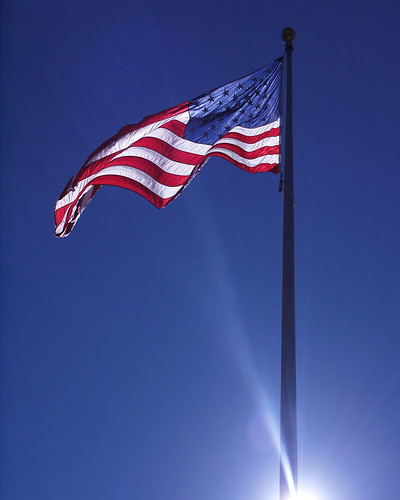
I was very taken by a story in the Chicago Tribune today, Memorial Day. In the small town of Sullivan, Illinois, the people of this small town of 4,400, honor each of their residents that are serving abroad in the United States Armed Forces. For each person service they have a sign with their name, the unit they are serving with and an American flag. I am always happy to honor those who have served or are serving our country every Memorial Day, but I also feel remiss the other 364 days of the year when I am not giving these brave people the acknowledgement they desire for their time and service. The plan that the small town of Sullivan has in place helps everyone remember every day.

What do you think? Is this something we should consider doing in our home towns?

Sunday, May 17, 2009

Does a Picture Tell a Thousand Words?

This past weekend, my brother returned from college and over dinner I was explaining the presentation given by Louis Masur related to the photograph “The Soiling of Old Glory.” Mr. Masur commented that the picture does not tell a thousand words, but you actually need a thousand words to accurately explain what was happening when it was taken. My brother mentioned a photograph project he did in English class last fall on a photograph call “Trolley” taken in New Orleans around 1955 by Robert Frank and published in The American. In contrast to Masur’s “The Soiling of Old Glory,” “Trolley” shows a picture that reveals much about the racial situation in New Orleans just before the Civil Rights Movement and Rosa Parks famous bus ride.

Take a look at the photograph. Do you agree that the "Trolley" photograph “tells a thousand words”?

Sunday, May 10, 2009

American Flag and Sports

As we discussed in class and the study of our book, The Soiling of Old Glory, the American Flag can be used for a number of meanings and serve many purposes. While watching the Blackhawks game I observed a number of fans using the American flag as a object of pride and to support and cheer on their team. This is much different from the American flag being used as a symbol of distress or used during protests. Furthermore, this support of the American flag contrasts that of how the German’s feel about their flag.


Next, while play a game at Duke Child’s softball and baseball fields I observed the American flag located behind center field. This flag is used when singing the national anthem. In addition, this flag is used for the purpose of checking the direction and intensity of the wind. Rarely, is the American flag acknowledged as a patriotic symbol with the singing of the national anthem.


It is interesting to contrast the different uses of the flag. It can be used to show patriotism, to serve a purpose, as protection or a weapon, or even used to support a sports team and country.
What other ways have you observed the flag being used?

It's a Matter of Class


Our class discussion this past Friday was very interesting as it appears that New Trier students have a warped perception of “upper class,” “middle class,” and “lower class.” When we determined the social class of Mr. Bolos based on profession, income, education, and overall wealth, many students were surprised to see that what they see as average “middle class” on the north shore is in reality the top of the “upper class” worldwide. I believe that our perceptions are skewed and related to two main things. First, we live in a predominantly “upper class” area but still try to divide it into “upper,” “middle,” and “lower” classes. Second, I believe the media has contributed to our perception of the different classes. Through television and advertising, we are exposed to the “upper class” on shows glamorizing the lives of the super rich and famous. This upper class is a very elite group but the media portrays them to be the norm. In contrast, the media under-represents the middle and lower working class. This is illustrated in a video narrated by Ed Asner and based on the book by Pepi Leistyna, “Class Dismissed” that shows how the media have negatively portrayed the working class.

Watch and see what you think about how shows such as “The Jerry Springer Show” “Beavis and Butthead,” and “Goodtimes” portray the middle class. What do you think of the comments made in the “Class Dismissed” video? Do you think their point is valid?

Thursday, May 7, 2009

American Flag


Yesterday in class, we had a discussion on the American Flag. When I was home I was talking to my mom and discussing the importance of the American Flag to our family. She told me that my brother has a framed American Flag that was once draped over the casket of my Uncle Andy, who served in the military. It is an honor that my brother has this special belonging, and furthermore, the American flag holds a personal meaning for our family. Next, I asked my mom what she thought of when she saw the American flag. She told me that it reminded her of her family member that traveled to the United States from other countries. She said it reminds her of her heritage and ancestors.


On the drive home from my practice I was stopped at a train. On the train there was a picture of a flag. What is the reason that the American flag is placed there and who puts it on the train? The train manufacturers, the government?


Currently I am sitting in a computer lab at school. Behind me hanging vertically, in the front of the room, is an American flag, but you are only able to see the bottom of it because the overhead projector screen covers the stars. This projector screen is not pulled down, it is merely sitting rolled up waiting to be used. Why is the flag hidden behind it and not displayed to the public?


Tuesday, May 5, 2009

Universal Health Care During Obama’s First Term?


David Wessel, in his article “Moment Is Ripe for President to Fix Health Care,” from April 30ths Wall Street Journal, states that it appears that Obama is aggressively developing a health care plan. Wessel believes that there are four reasons that the time is right for a successful new health care plan. Unlike 1994 when Clinton presented his Health Security Act, there has been a significant downturn in the economy with an increase in the number of uninsured Americans and an increase in the cost of health care so that it now is approximately 17.6% of the U.S.’s spending. Thus, the general public is unhappy with “the status quo.” Next, Obama’s White House team has learned from Clinton’s mistakes, that his plan cannot be complicated and complex. Third, the Democrats have a majority in congress and appear to be united in their support of health care legislation to provide coverage for the American people. Finally, “the price tag” to fund health care does not seem to be such a significant issue anymore. Compared to the cost of the bank bailout, more than 750 billion, funding health care now seems to be doable.

Do you think Obama will present a new health plan by the end of 2009? If so, do you think it will pass congress?
How will the United States pay for all these expensive plans and bailouts?